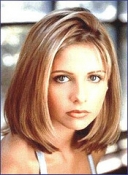
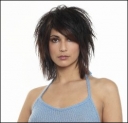
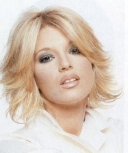
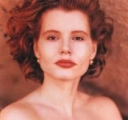
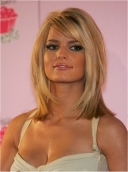
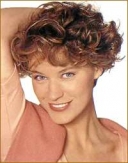
So - What Shape Is Your Face? Tips On How To Get The Perfect Hairstyle, For Your Facial Shape... Its very hard to actually perfectly fit a given face shapes perfectly. The following guidelines will help you soften, and counteract narrowness or width in your face shape. With these simple guidelines you will be well on your way to being able to find a hairstyle that will suit your face shape. Remember you also want to tweak your new hairstyle so that it compliment your personality. Make it your own so to say...
|
||||||||||||||||||||||||
Dig those Curles! Any length of hair can be vamped up with curls. You can add curl to medium length, even short hair styles! If it's long enough to bend around the roller once or twice, it'll set well. A myriad of things can take on the role of roller. Hot rollers, Velcro's, bendies, rags, you get the idea. You can even create curls with nothing but clips to secure twisted or pin curled sections. The results you get with your curly hair styles will depend on the quality of your set. There are a few simple rules for effective wrapping regardless of the tool you use. How you secure your sections, though, will vary with your chosen method. Both elements are equally important. Always do a roller set on dry hair! Setting rollers on wet hair means long drying times (we are talking several hours) and it's harder to prevent clip marks and blend parted sections which can resemble a grid pattern on your scalp... not a good look! If your hair is freshly washed use an appropriate pre-drying hair product for your hair type and blow it thoroughly dry. For hair that's very curly or tends to be frizzy, use a natural bristle paddle hair brush to smooth it out a bit before setting... especially around the part and hairline. Ironic isn't it? Smoothing out your curls to create a curly hair style. Hmmm... But truly, it's the way to go for a silky, defined curl.
|
How to achieve and maintain a healthy head of beautiful hair. Three main things are needed for a good-looking head of hair good health, the right attention to cleanliness, and caution when using cosmetic treatments. 1. Adequate Diet Hair growth depends on an adequate diet. A widespread diet problem which causes loss of hair is iron deficiency Anaemia. The cause is too little iron in blood, brought on by a diet containing too little meat, eggs, cereals or peas and beans. Fresh fruits and vegetables are also needed to provide vitamin C, which enables the body to absorb iron. 2. Cutting the hair Although cutting the hair is not essential to its well-being, it is easier to keep the scalp clean if the hair is kept reasonably short. Regular cutting does not make the hair grow strong or faster. 3. How hair can be damaged Although scalp hair is hardy, and can withstand a lot of abuse, it can be damaged by too much or inexpertly applied perming, dyeing, bleaching and massage. The amount of beautying the hair can take varies from person to person. Occasionally the scalp is allergic to the dye and becomes inflamed and swollen. To prevent this occuring, the dye should be tested by applying it to a small area on the arm. If a patch of inflammation has developed, the dye must not be used on the hair. Most people who bleach their hair do so with hydrogen peroxide. If the peroxide is repeatedly applied, it may make the hair brittle. If this happens the hair may turn rough, develop split ends, or become thinned or shortened. How you got your natural hair colour Most people who bleach their hair do so with hydrogen peroxide. If the peroxide is repeatedly applied, it may make the hair brittle. If this happens the hair may turn rough, develop split ends, or become thinned or shortened. If you're need hair colour advice, it helps to first understand how you got your natural hair colour. No one else has exactly the same hair colour as you. It may look black or brown, but there are subtle differences that are uniquely yours. Nature creates a different colour for everyone using only two types of pigment: eumelanin (black pigment) and pheomelanin (red/yellow pigment). Three factors determine hair colour: the type of melanin stored in the cortex of the hair; how many melanin granules exist; and whether those granules are close together or far apart. If your natural hair colour is: Black - It contains densely packed melanin granules full of black pigment. Brown - It contains a loose pattern of black-filled granules OR granules blended with both black and red/yellow pigments. Blonde - It contains very few granules with very little bits of black pigment. Red - It contains loosely packed granules containing red/yellow pigment. Grey - a grey hair contains little or no pigment as the pigment cells in the follicle have died. It will show up as silver, gray, or white as it grows. Eventually, all the pigment cells will die and the hair becomes completely gray. |
|||||||||||||||||||||||